Relational practices (Circling™, Authentic Relating): Structured interpersonal exercises designed to deepen connection, presence, and authentic communication.
Meditation: Mindfulness or focused practice to calm the mind, increase awareness, and cultivate mental clarity.
Anger integration: Techniques to recognize, process, and express anger safely and constructively.
Shadow work: Exploring and integrating unconscious or suppressed aspects of the self to achieve personal growth.
Non-Violent Communication (NVC): A communication method emphasizing empathy, honesty, and resolving conflicts without blame.
Cognitive-behavioural Therapy (CBT): Evidence-based therapy focusing on changing unhelpful thoughts and behaviours to improve mental health.
Realise, Accept, Investigate, Nurture (RAIN): A mindfulness-based approach for recognizing and working with difficult emotions.
Nervous system regulation: Practices to calm or balance the autonomic nervous system for emotional and physiological stability.
Childhood Post-Traumatic Stress Disorder (cPTSD): A trauma-related condition resulting from prolonged or repeated childhood trauma, affecting emotional regulation and relationships.
Internal Family Systems Therapy (IFS): A therapy model that identifies and harmonizes different “parts” of the self to promote inner balance and healing.
What I Do - Listening, Awareness, Reflecting
Can you tell a little bit about your work?
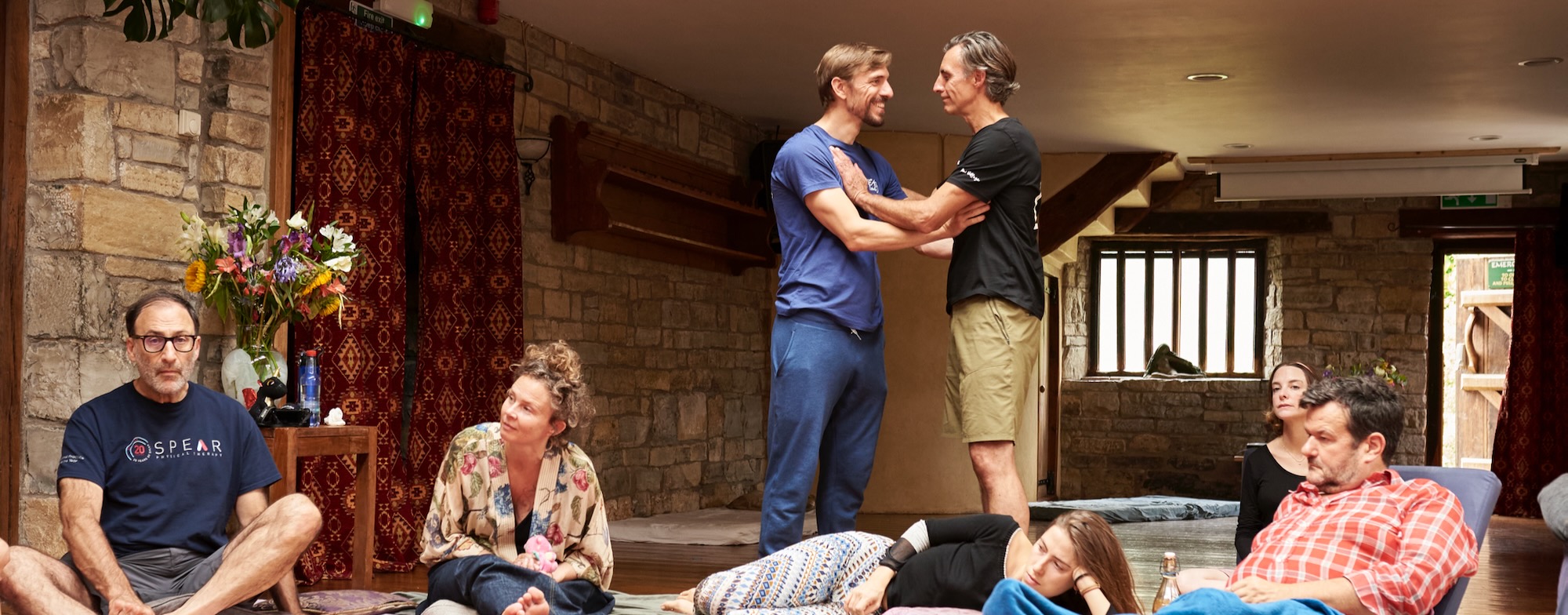
I listen to people when they talk, but I also listen to their tone. I notice all of the subtle movements they make. It all feels very loud to me. I name what’s actually happening for me—when my chest gets tight, when I feel frustrated, when something feels uncomfortable, or when something doesn’t match.
So, is it like you reflect to people what they might not be aware of or what they can’t see?
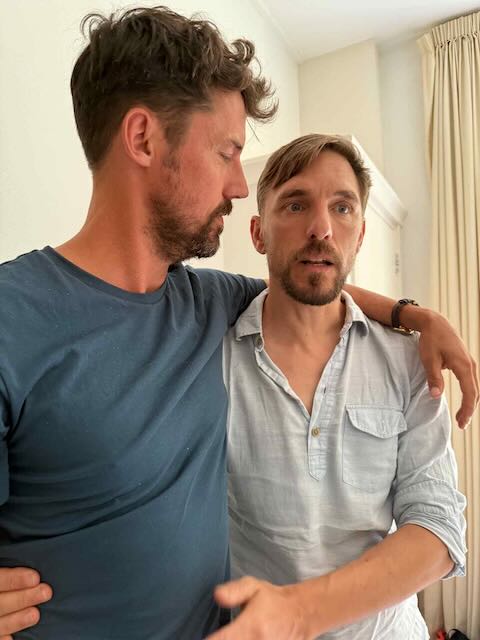
Yeah. I encourage through a kind of gentle wrestling. It’s like dancing—attuning to how comfortable they are in that dance. I invite them in, encourage them, or stand beside them if they have no desire to move, and then become curious about that.
What I Want to Share
Freedom of Expression
Even this—me making noises, expressing freely—is new. I feel comfortable expressing myself in many contexts now, even here. That freedom is a massive change.
Relationship with Self and Body
My relationship with myself and my body has transformed. I’m in love with this body that carries me. There’s pleasure in life now, in everything I do and whoever I’m with.
The Search for Freedom
I’ve lived nomadically for years, freelancing, running my own business. It was an external search for freedom—following passions, breaking norms. But over the past five or six years, the search turned inward. Now it’s about internal freedom—the freedom to be myself, know what I want, communicate it, and act on it.
Integration of Freedom into Life
That freedom shows up everywhere—relationships, work, friendships, projects, and solitude. It’s how I talk to myself when I’m stressed, how I motivate myself, how I handle fear and imagined judgment.
Love and Wholeness
Now there’s so much love inside me. It’s a loving place. I wish I could share that experience with others because it’s a far better way to live.
Honest Expression and Direct Speech
I used to manage my relationships by hiding the truth, steering conversations in “safe” directions. Eventually I’d feel dissatisfied, resentful, and withdraw. I was terrified to express what I truly felt or thought.
Now, I can express really ‘edgy’ things directly and honestly. My awareness gives me clarity, and I know how to express myself so people can hear it. Often, they laugh with gratitude. It’s still a happy surprise for me, but it shows me how supportive vulnerability can be.
I want to share what I’ve learned, so more people can see these changes in their lives.
What You Might Experience
Openness and Curiosity
If you put yourself in their shoes, how do you think that feels for them?
I think it’s nice to have someone really listening—someone who doesn’t care about judging but is interested in what’s true. I get excited about truth. It’s like an older brother crouching down next to me, genuinely curious about what I’m creating, not needing to tell me what to do, just wanting to experience it with me.
What We Might Cover
Energy and Emotion in Discovery
I love when people start noticing their own truth—when they question themselves and realise what they actually like. When people talk back to their inner critics or the imagined judgments of others, when they say, “No, I want this.” People get energised, and I do too.
Working with Anger
I also love exploring anger—how to notice, express, or be with it. I like when people think they’re not angry and then realise they are. It makes me happy when they uncover that hidden energy. Then comes how to hold it, communicate it, act on it, accept it, love it. It’s a rich and beautiful topic.
Relationship to Self
Another big one is how people relate to themselves. My own journey has been learning to be kinder in my head, creating a cozy, supportive internal environment. Seeing others become aware of how they talk to themselves is beautiful.
Money Clinic
I’ve got lots of experience supporting people through their financial organisation woes.
A supportive emotional coach and practical financial mind.
There with you while you open all the avoided mail and messages,
creating simple overview documents and tools to get a solid view on your income and outgoings, and current status.
I’m not a financial advisor, I’m an emotional coach,
I arrive prepped like a house cleaner, ready to enjoy the satisfying tidying process. There’s not much that can shock me.
Everything is confidential.
I care and want to support people who are suffering.
We work together to build a clear and honest view of your current situation,
helping to manage and improve your financial status,
by gaining more resilience and adaptability in your emotional response to money stress.
I love to witness the relief and satisfaction,
as you overcome blocks you have procrastinated for a long time,
and we embrace your money fears in the light of day.
My Experience
I've spent a lot of time in the boxing ring with Money.
Trying to survive in life after finishing a degree in Fine Art...
Unemployment...
Living years on £10 a day...
Earning a huge salary and being too scared to spend it...
Shame of other's opinions...
I've consumed years worth of professional writings, advice and guidance and opinions.
But most importantly, I've spent years learning to sit with underlying emotions.
Testimonial - Anna Brünink
I‘ve done the Money Clinic with James and I really enjoyed these sessions. What I love most is James’s capacity to stay with difficult emotions while guiding with clarity and ease through challenging waters. (I always panicked before the sessions, as I had avoided this topic for such a long time).
He is really good at seeing the truth of the underlying issue and pointing it out right from the start.
I also really appreciate the practical tools I gained from these sessions which I use in everyday life. It makes my relationship with money way lighter - and I see how it is evolving.
So if you want truth, clarity, being guided with care and lightness — and things to actually shift, I highly recommend these sessions!
So grateful. Anna
Mental Health
Mental health is an essential part of people’s lives and society. Poor mental health affects our well-being, our ability to work, and our relationships with friends, family, and community.
Mental health conditions are not uncommon. Hundreds of millions suffer from them yearly, and many more do over their lifetimes. It’s estimated that 1 in 3 women and 1 in 5 men will experience major depression in their lives. Other conditions, such as schizophrenia and bipolar disorder, are less common but still have a large impact on people’s lives.
Lay-therapy refers to the practice of offering emotional support, active listening, and guidance by a non-clinically trained person, drawing on empathy and human connection rather than formal psychological methods or qualifications.
Those high in emotional intelligence naturally sense tone, body language, and unspoken feelings, helping others feel seen rather than analysed. While professional training provides essential ethics, structure, and tools, it can also risk over-intellectualising what is, at its core, a human relationship. The evidence from “common factors” research confirms that empathy, warmth, and alliance drive most of therapy’s success.
Empathy lies at the heart of all effective therapeutic work. Genuine understanding and emotional attunement form the foundation of trust and safety, allowing people to open up, reflect, and heal — often more powerfully than any specific technique or qualification.
Research consistently shows that empathy and the quality of the therapeutic alliance predict client improvement more strongly than years of experience or theoretical orientation.